Prevalence of Respiratory Symptoms, Lung Function Abnormalities and Cardiac Conditions in Jeepney Drivers Exposed to Different Levels of Black Carbon
DOI:
https://doi.org/10.67474/lcpsp.14.1.2026.16939Keywords:
ambient black carbon, environmental epidemiology, cardiac conditions, BOLDAbstract
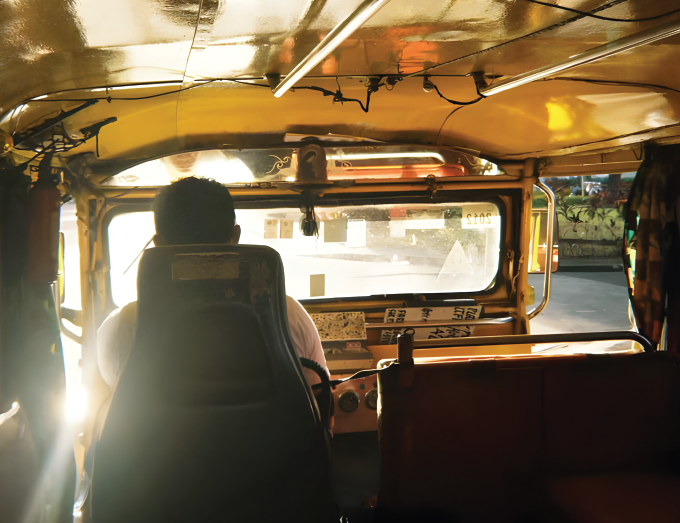
Background & Aim: The jeepney, a traditional mode of transportation in the Philippines since the end of World War II, has been shown by a recent study to be a major source of black carbon (BC) in the air of Metro-Manila. Chronic exposure to black carbon may constitute a significant health hazard for jeepney drivers. This study assessed the adverse effects of BC exposure to on the prevalence of symptoms, electrocardiogram (ECG) and lung function abnormalities in jeepney drivers in selected areas in Metro-Manila.
Methods: Between December 2019 and March 2020, jeepney drivers plying two routes with different levels of measured BC were assessed on their current health status using a modified version of the BOLD questionnaire, ECG and spirometry. The effect of BC severity and other respiratory risk factors such as smoking, environmental and other occupational exposures were also determined.
Results: One hundred three (103) jeepney drivers with a mean driving experience of 21.4 ± 11.3 years participated in the study, grouped according to severity of BC levels in the route. Jeepney drivers on the route with higher BC severity reported five times more symptoms (p=0.005) and showed 3 times more ECG abnormalities (p=0.014) between the two BC groups using univariate analysis There was no substantial difference in lung function parameters were seen in the comparative BC groups. Logistic regression analysis showed that high BC levels accounted significantly for increased prevalence of symptoms (OR=5.84 [95% CI: 1.60, 21.39], p<0.01) and ECG abnormalities (OR=3.2 [95% CI: 1.22, 8.37], p=0.018) in the high BC group. No significant effect of other respiratory risk factors was found.
Conclusion: The study provides evidence of the effect of BC levels on the prevalence of symptoms and ECG abnormalities in a vulnerable and highly exposed population such as jeepney drivers. Further studies are required to determine the effect of BC exposure on lung function in this population.
References
1. Krzyzanowski M, Kuna-Dibbert B, Schneider J, eds. 2005. Health Effects of Transport-Related Air Pollution. Copenhagen: World
Health Organization.
2. Health Effects Institute. 2010. Traffic Related Air Pollution: A Critical Review of the Literature on Emissions, Exposure and Health Effects. HEI Special Report 17. Boston: Health Effects Institute.
3. Choudhary, H., Tarlo, S.M.. Airway effects of traffic-related air pollution on outdoor workers. Curr. Opin. Allergy Clin. Immunol 2014.
14, 106-112.
4. Jones, A.Y., Lam, P.K., Dean, E., Respiratory health of bus drivers in Hong Kong. Int. Arch. Occup. Environ. Health 2006; 79, 414-418.
5. Lewné M, Nise G, Lind ML, Gustavsson P. Exposure to particles and nitrogen dioxide among taxi, bus and lorry drivers. Int Arch
Occup Environ Health. 2006 Mar;79(3):220-6. doi: 10.1007/s00420-005-0047-6. Epub 2005 Nov 9. PMID: 16283363.
6. Arphorn S, Ishimaru T, Hara K, Mahasandana S.J. Considering the effects of ambient particulate matter on the lung function of
motorcycle taxi drivers in Bangkok, Thailand. Air Waste Manag Assoc. 2018 Feb;68(2):139-145. doi: 10.1080/10962247.2017.1359217.
Epub 2018 Jan 16.PMID: 28745558.
7. Wu S, Deng F, Niu J, Huang Q, Liu Y, Guo X. Association of heart rate variability in taxi drivers with marked changes in particulate
air pollution in Beijing in 2008.. Environ Health Perspect. 2010 Jan;118(1):87-91. doi: 10.1289/ehp.0900818.PMID: 20056565.
8. Hachem M, Bensefa-Colas L, Lahoud N, Akel M, Momas I, Saleh N.Cross-sectional study of in-vehicle exposure to ultrafine particles
and black carbon inside Lebanese taxicabs.. Indoor Air. 2020 Nov;30(6):1308-1316. doi: 10.1111/ina.12703. Epub 2020 Jun 22. PMID: 32496613
9. Tamura K, Jinsart W, Yano E, Karita K, Boudoung D. Particulate air pollution and chronic respiratory symptoms among traffic
policemen in Bangkok. Arch Environ Health. 2003 Apr;58(4):201-7. doi: 10.3200/AEOH.58.4.201-207.PMID: 14655899.
10. Ingle ST, Pachpande BG, Wagh ND, Patel VS, Attarde SB. Exposure to vehicular pollution and respiratory impairment of traffic
policemen in Jalgaon City, India. .Ind Health. 2005 Oct;43(4):656-62. doi: 10.2486/indhealth.43.656.PMID: 16294920.
11. Wongsurakiat P, Maranetra KN, Nana A, Naruman C, Aksornint M, Chalermsanyakorn T Respiratory symptoms and pulmonary
function of traffic policemen in Thonburi.J Med Assoc Thai. 1999 May;82(5):435-43.PMID: 10443092.
12. Roemer WH, van Wijnen JH. Daily mortality and air pollution along busy streets in Amsterdam, 1987-1998. Epidemiology 2001;
12:649-653.
13. Roemer WH, van Wijnen JH. Differences among black smoke, PM10, and PM1.0 levels at urban measurement sites. Environ
Health Perspect 2001; 109:151-154.
14. Janssen NAH , Hoek G, Simic-Lawson M, Fischer P, van Bree L, ten Brink H, Keuken M, Atkinson RW, Anderson HR, Brunekreef B,
and Cassee FR. Black Carbon as an Additional Indicator of the Adverse Health Effects of Airborne Particles Compared with PM10
and PM2.5; Environmental Health Perspectives 2011; 119 (12): 1691-99.
15. Schaap M, van der Gon HAC. . On the variability of black smoke and carbonaceous aerosols in the Netherlands. Atmos Environ 2007;
41:5908-5920.
16. Kecorius S, Madueno L, Vallar E, et al. Aerosol particle mixing state, refractory particle number size distributions and emission
factors in a polluted urban environment: Case study of Metro Manila, Philippines. Atmospheric Environment. 2017; 170: 169-183.
doi:10.1016/j.atmosenv.2017.09.037.
17. Environmental Health Service, Department of Health. Philippines Health and Environment: the Vital Link. Executive Summary; Manila, Philippines (2001), p 11-12..
18. Cayetano M.G., Linda S.M., Lamorena-Lim R. and Bagtasa G., "Low and high emission zones at the pedestrian breathing level
identified using multi-parameter air pollution measurements", (2021) Manuscript in preparation.
19. Idolor LF, de Guia T, Francisco NA, et al. Burden of obstructive lung disease in a rural setting in the Philippines. Respirology 2011; 16:
1111-1118.
20. Buist AS, McBurnie MA, Vollmer WM, et al. International variation in the prevalence of COPD (The BOLD Study): a population-based
prevalence survey. Lancet 2007; 370: 741-750.
21. Crapo RO, Morris AH, Gardner RM. Reference spirometric values using techniques and equipment that meet ATS Recommendations.
Am. Rev. Respir Dis 1981; 123: 659-664.
22. Guan W.J., Zheng X.Y., Chung K.F., Zhong N.S. Impact of air pollution on the burden of chronic respiratory diseases in China: time for
urgent action. Lancet. 2016; 388:1939-1951.
23. Li J., Sun S., Tang R. Major air pollutants and risk of COPD exacerbations: a systematic review and meta-analysis. Int J
Chronic Obstr Pulm Dis. 2016; 11:3079-3091.
24. Bloemsma L.D., Hoek G., Smit L.A. Panel studies of air pollution in patients with COPD: systematic review and meta-analysis. Environ
Res. 2016;151:458-468.
25. Komalkirti A., Sundeep S. Household air pollution and its effects on health. F1000Res. 2016;5 F1000 Faculty Rev-2593.
26. Schiavoni G., D'Amato G., Afferni C. The dangerous liaison between pollens and pollution in respiratory allergy. Ann Allergy Asthma
Immunol. 2017; 118:269-275.
27. Hamanaka RB and Mutlu GM (2018). Particulate Matter Air Pollution: Effect on the Cardiovascular System. Front. Endocrinol. 9:
680.doi: 10.3389/fendo.2018.00680.
28. Brook RD, Rajagopalan S, Pope CA III, Brook JR, Bhatnagar A, Diez-Roux AV, et al. Particulate matter air pollution and cardiovascular
disease: an update to the scientific statement from the American Heart Association. Circulation (2010) 121:2331-78. doi: 10.1161/
CIR.0b013e3181dbece1.
29. Breitner S, Peters A, Zareba W, Hampel R, Oakes D, Wiltshire J, Frampton MW, Hopke PK, Cyrys J, Utell MJ, Kane C, Schneider
A & Rich DQ. Ambient and controlled exposures to particulate air pollution and acute changes in heart rate variability and repolarization. Scientific Reports (2019) 19:1946 | https://doi.org/10.1038/s41598-019-38531-9.
30. Henneberger A, Zareba W, Ibald-Mulli A, Rücker R, Cyrys, Couderc JP, Mykins B, Woelke G, Wichmann HE and Peters A, Repolarization
Changes Induced by Air Pollution in Ischemic Heart Disease Patients. Environmental Health Perspectives (2005); 113: 440-446.
31. Ackermann-Liebrich U, Leuenberger P, Schwartz J, et al. Lung function and long-term exposure to air pollutants in Switzerland.
Study on Air Pollution and Lung Diseases in Adults (SAPALDIA) Team. Am J Respir Crit Care Med 1997; 155: 122-129.
32. de Jong K, Vonk JM, Zijlema WL, et al. Air pollution exposure is associated with restrictive ventilatory patterns. EurRespir J 2016;
48: 1221-1224.
33. Forbes LJ, Kapetanakis V, Rudnicka AR, et al. Chronic exposure to outdoor air pollution and lung function in adults. Thorax 2009; 64:
657-663.
34. Downs SH, Schindler C, Liu LJ, et al. Reduced exposure to PM10 and attenuated age-related decline in lung function. N Engl J Med
2007; 357: 2338-2347.
35. Guo C, Zhang Z, Lau AKH, et al. Effect of long-term exposure to fine particulate matter on lung function decline and risk of chronic
obstructive pulmonary disease in Taiwan: a longitudinal, cohort study. Lancet Planet Health 2018; 2: e114-e125.
36. Adam M, Schikowski T, Carsin AE, et al. Adult lung function and long-term air pollution exposure. ESCAPE: a multicentre cohort
study and meta-analysis. Eur Respir J 2015; 45: 38-50.
37. Liu S, Zhou Y, Liu S, et al. Association between exposure to ambient particulate matter and chronic obstructive pulmonary
disease: results from a cross-sectional study in China. Thorax 2017; 72:788-795.
38. Hachem M, Loizeau M, Saleh N, Momas I, Bensefa-Colas L. Shortterm association of in-vehicle ultrafine particles and black carbon
concentrations with respiratory health in Parisian taxi drivers. Environ Int. 2021;147:106346. doi: 10.1016/j.envint.2020.106346.
Epub 2020 Dec 31. PMID: 33388565.
Downloads
Published
How to Cite
Issue
Section
License
Copyright (c) 2026 Lung Center of the Philippines Scientific Proceedings

This work is licensed under a Creative Commons Attribution-NonCommercial 4.0 International License.
The Lung Center of the Philippines Scientific Proceedings is licensed under a Creative Commons Attribution-Non-Commercial 4.0 International license (CC BY-NC 4.0) which allows sharing, copying, and redistributing the material in any medium or format, under strict terms of giving appropriate credit to the authors and this journal, and use for non-commercial purposes.